Everything in your org, documented in one portal.
aprity documents objects, business rules, processes, screen flows and integrations in business language, and shows what depends on what. Your team reads it in the portal; your experts add what the metadata cannot say.
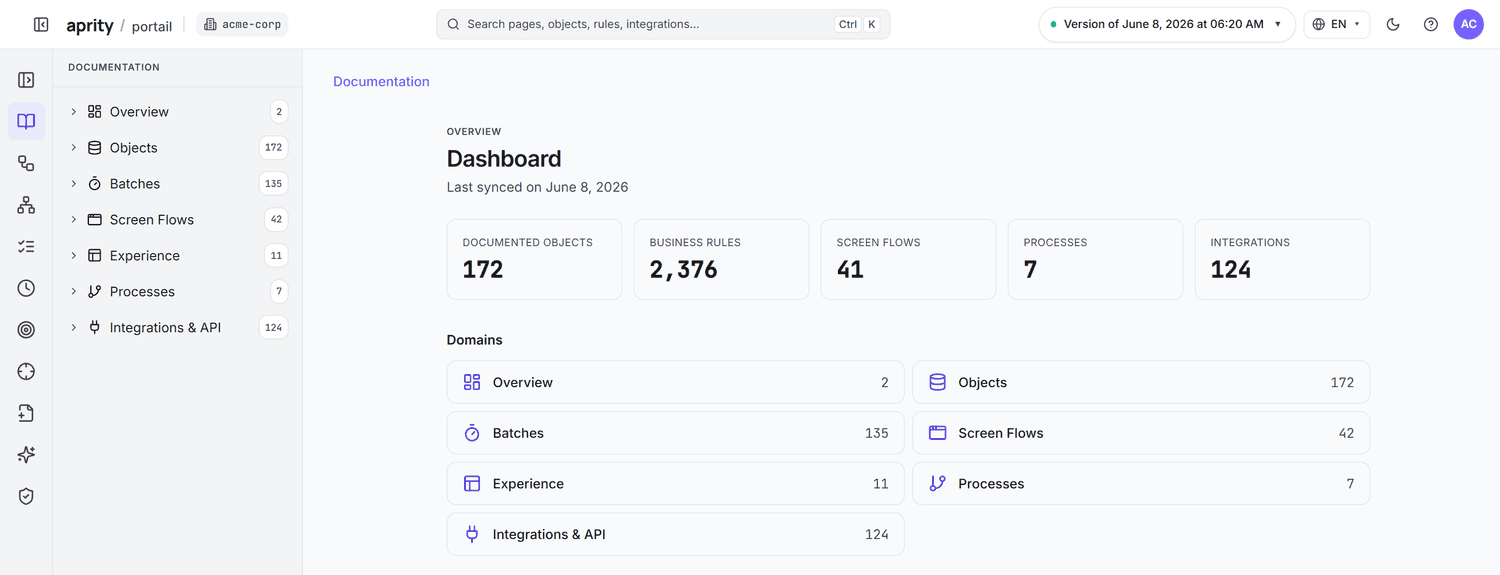
Every object, process and rule, in business language
Open an object and read what it is for, which rules block a save, which fields matter and which automations run on it. Business purpose comes from the org’s descriptions or from your experts, not from a guess.
- Object, process and rule pages
- Blocking rules and key fields per object
- Each explanation linked to its component
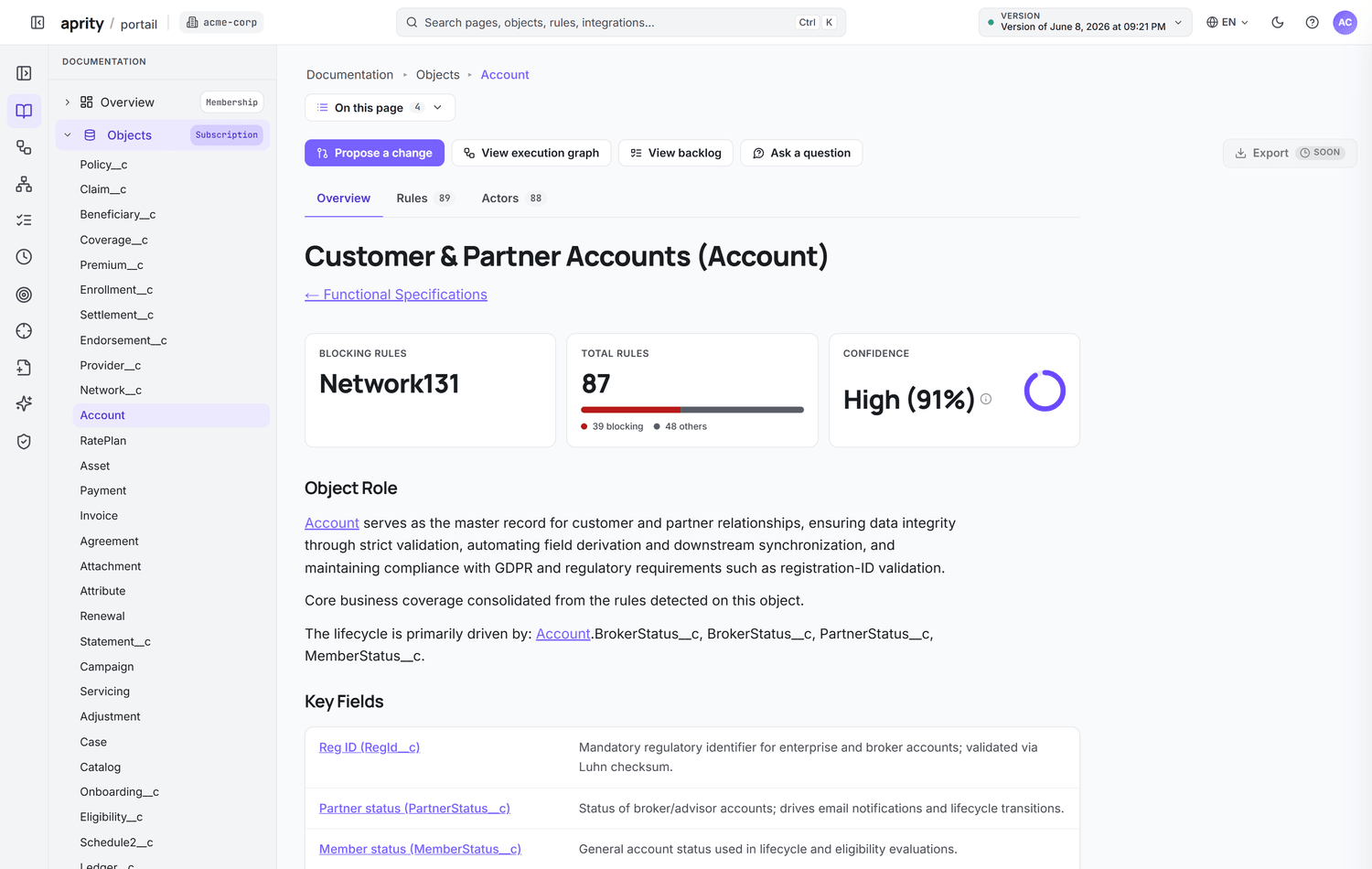
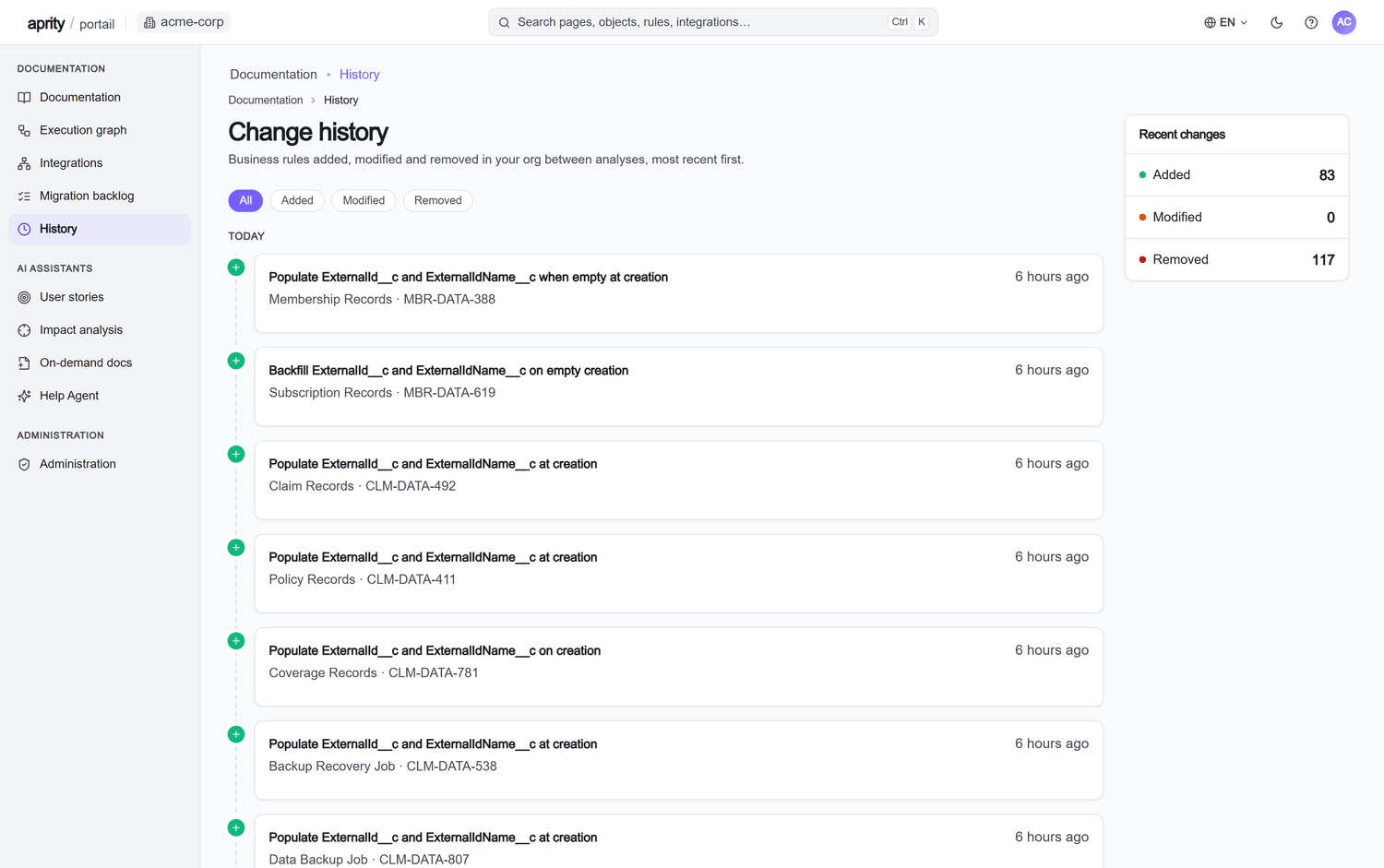
Read what moved between scans
Each scan is a point in time. Compare any two and see which business rules were added, removed or changed, described in business language rather than as a technical changelog.
- Scan-to-scan business-rule diff
- Added, modified, removed
- Business language, not a git log
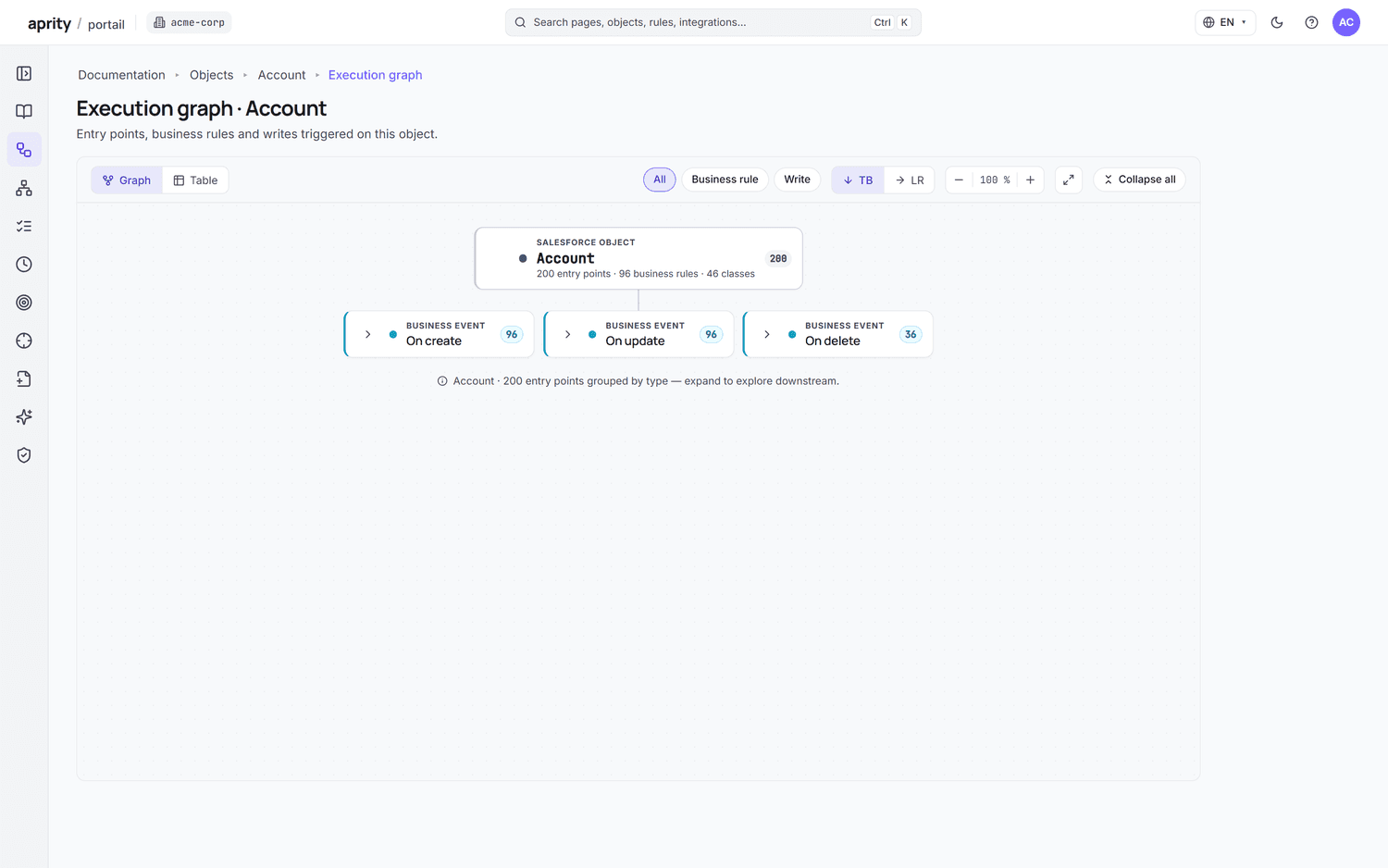
See what runs when a record is saved
Follow the execution paths aprity maps from Flow, processes and Apex: what fires on create, update and delete, and what each step reads, writes or calls. Check it before you change a component.
- Interactive, zoomable
- Node-level read, write and call
- Entry points grouped by event

Know which systems your org talks to
Inbound and outbound integrations detected in configuration and code, with the objects and processes they touch. An inventory of external dependencies for change reviews and audits.
- Inbound and outbound
- Object-level coupling
- External system inventory
Screen flows, walked step by step
A screen flow is documented as a functional journey: the steps a user moves through, the records read and written, and the validation rules and automations behind each step.
- Functional journey, step by step
- Validation rules and automations explained
- What each rule blocks, in business language


Add the knowledge only your experts have
Your experts correct, reject, complete or clarify an explanation from the page it concerns. Active contributions inform later analyses, and agents read them with their source and processing state. Discovered structure and contributed context stay distinguishable.
- Correct, reject, add or clarify, per page
- Admins can archive or supersede a contribution
- Active contributions inform the next analyses
Computed from the metadata. Explained by AI.
Dependencies and execution paths are computed from the metadata before any model writes a word. The AI explains that structure; it does not invent it. Explanations link to their source so a reviewer can check them, and runtime behaviour the metadata does not describe still needs validation by your team.
Explore the portal on your own org.
Free 14-day trial on your own org, read-only access. No credit card.