A consolidated org, documentation that went stale.
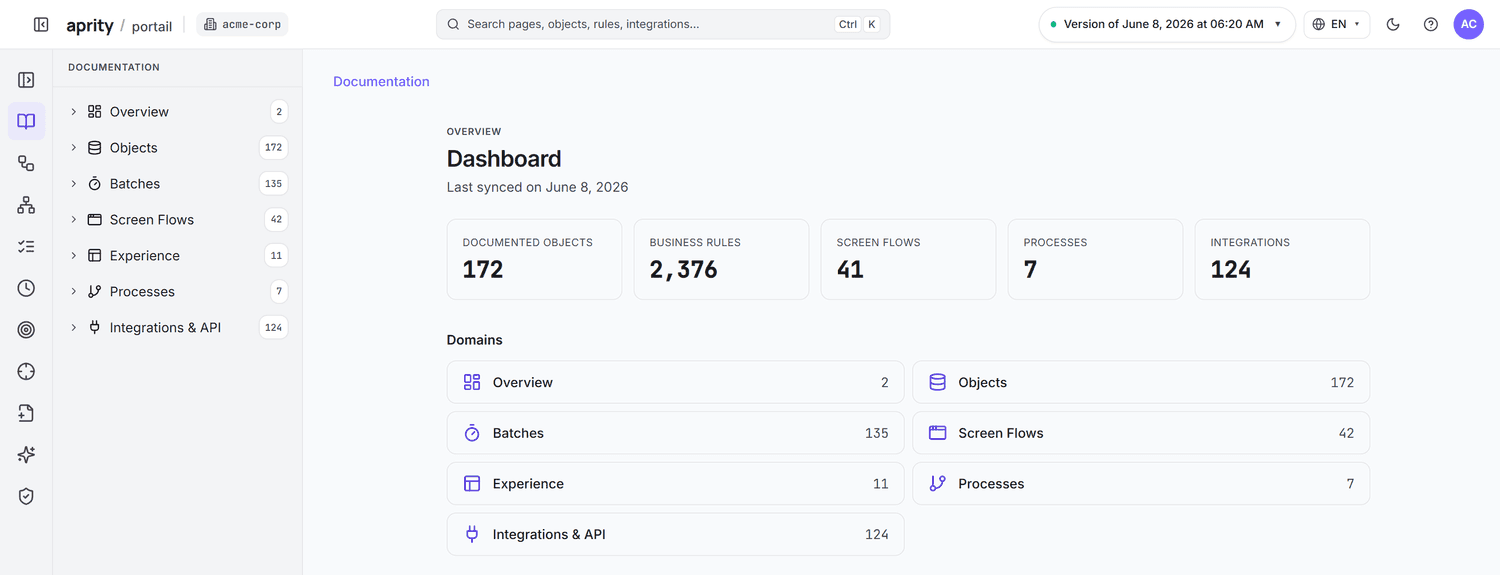
Acme Corp runs a single Salesforce org built up over years of consolidation — 172 documented objects and 4,595 analyzed components.
Documentation was a once-a-year effort — accurate the week it was written, stale a month later. Every audit and every migration review started by re-discovering the org from scratch.
From a yearly document to a living portal.
With aprity, the org is re-scanned every week. The documentation portal tracks the org as it evolves, and the team reads it directly instead of maintaining files.
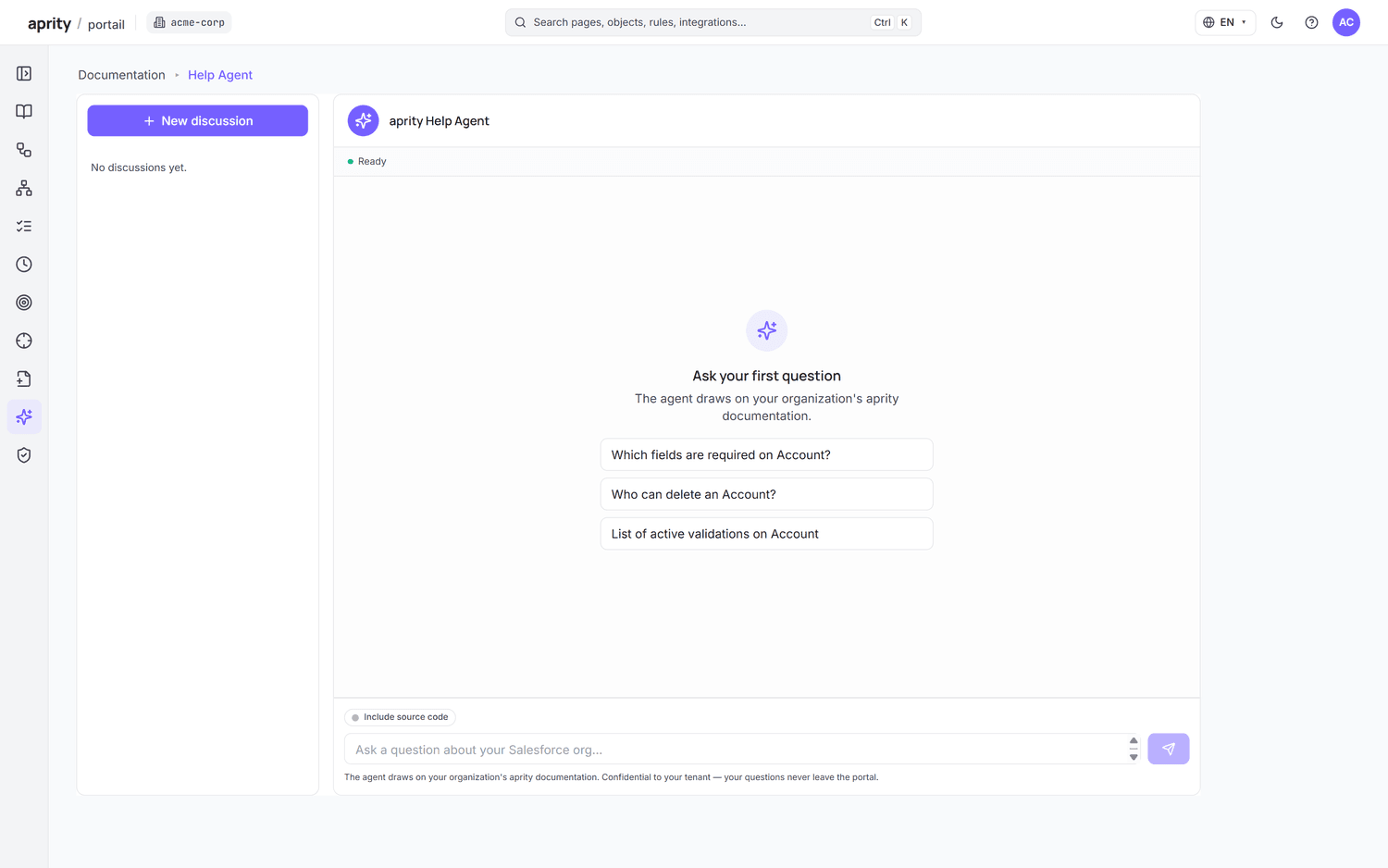
Object, process and rule docs each carry a confidence score and link back to source, so reviewers can verify rather than take a document on faith.
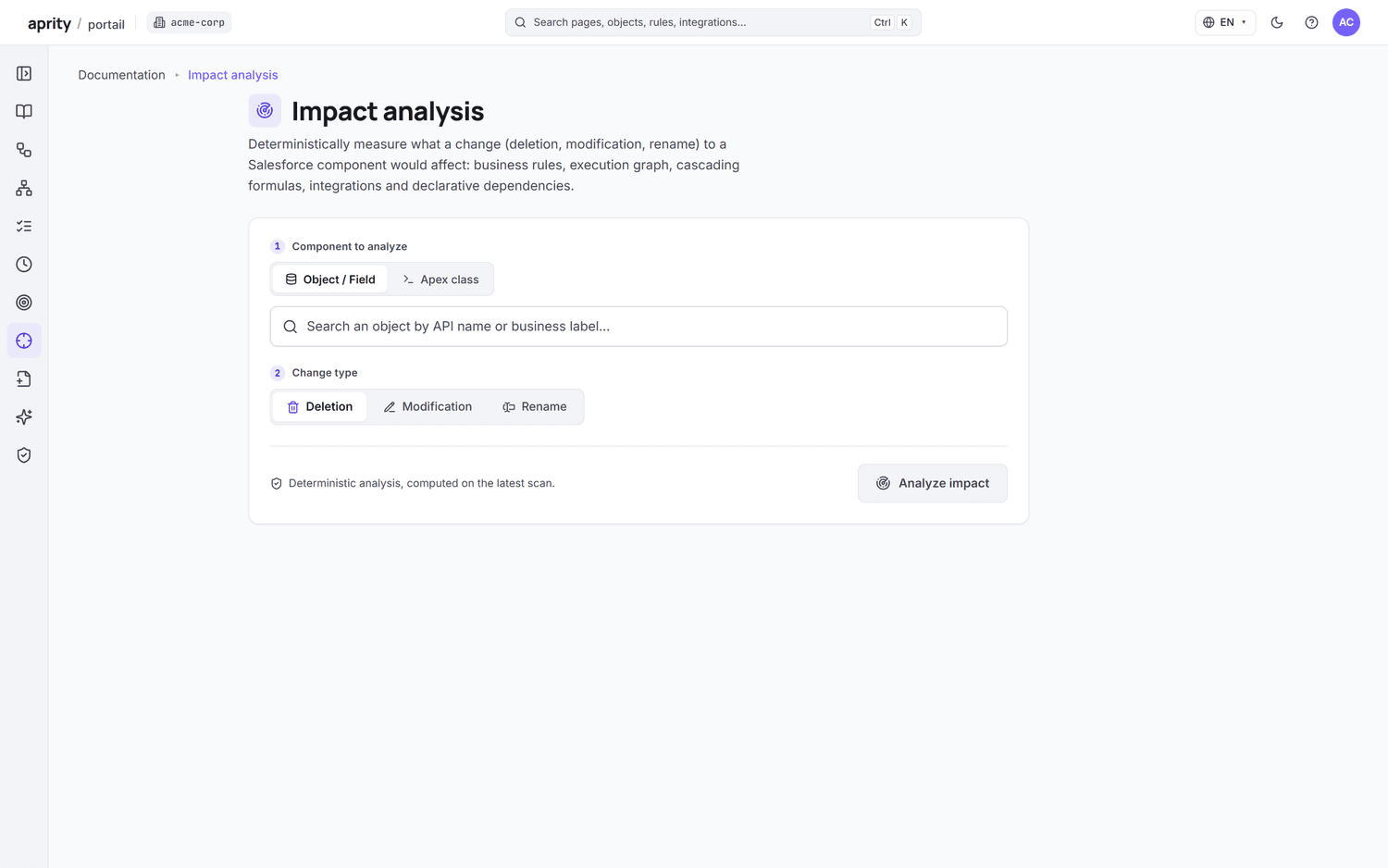
Impact analysis before every change.
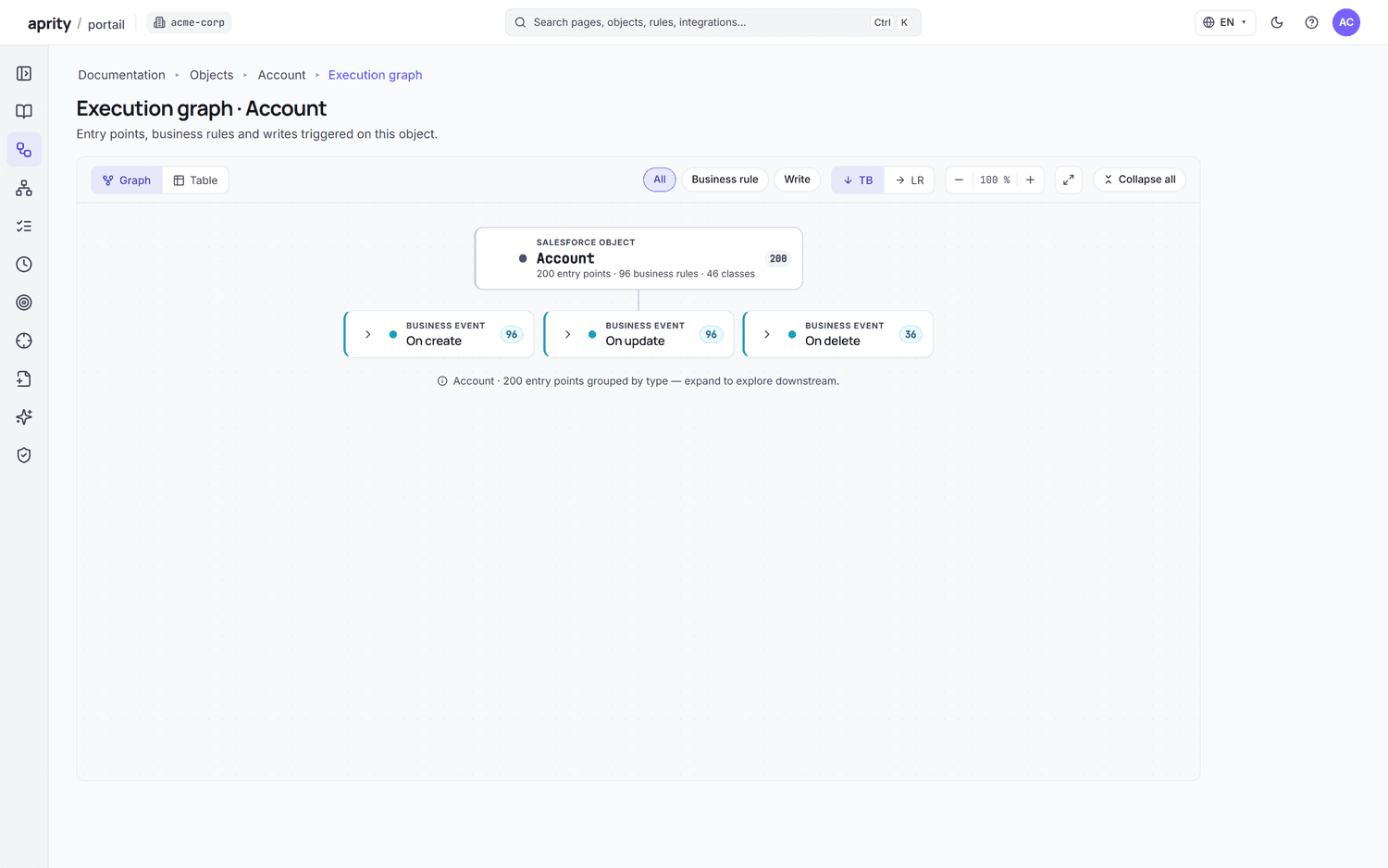
Before touching a field, an architect opens impact analysis and sees exactly what depends on it — rules, flows, reports — computed deterministically.
When new work is scoped, the Story Agent drafts Gherkin user stories in the portal and the team pushes them to Azure DevOps through the connector.
“The documentation is never out of date anymore, because there’s no document to update — it’s just the portal, current with every scan.”
CIO · Acme Corp (fictional example)